
From a demonstrated function to dedicated circuitry
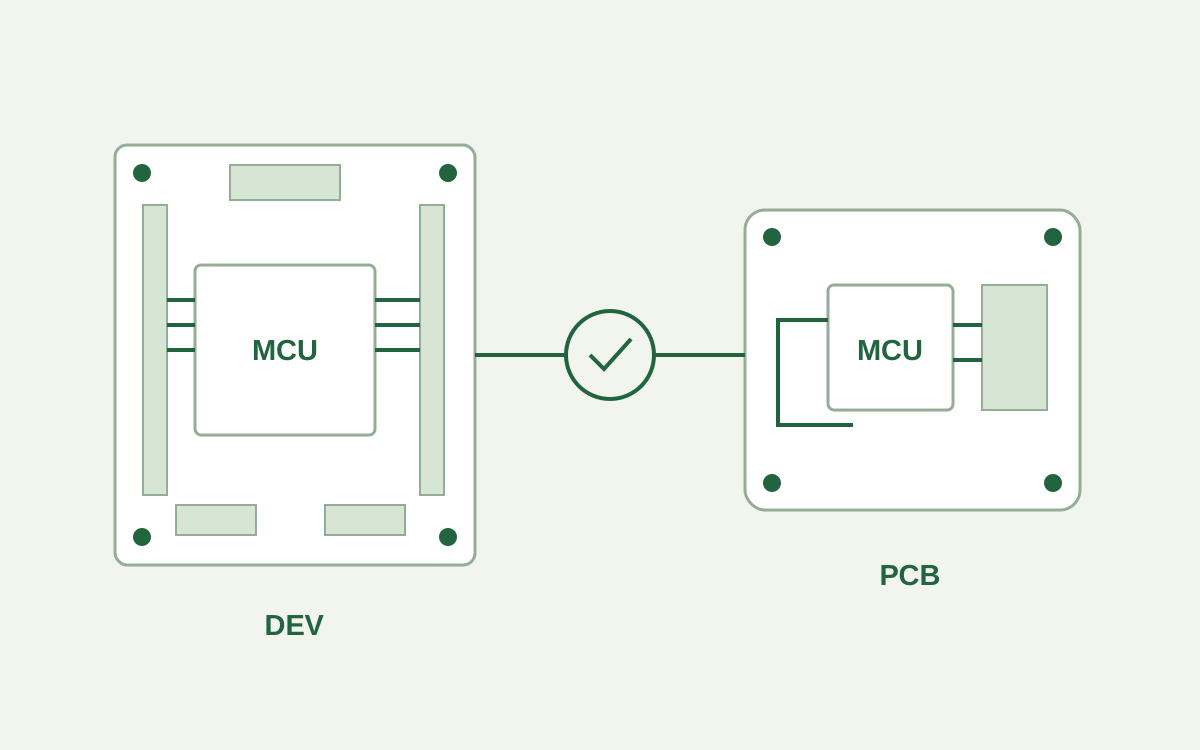
We translated experience gained with an STM32N6 bench and an FPGA emulator into the definition of a dedicated electronic board. The work covered hardware architecture, compatibility with the existing system, independent verification and initial changes to Altium Designer schematics.
A development board can demonstrate a function, but it includes circuits, connectors and dependencies that must be reviewed before building a product. We needed to decide what to retain from the original platform, which functions to recover from the previous system and which services to add, while preserving acquisition, diagnostics and maintenance.
Cross-checking schematics, firmware and the previous system
We compared three sources: the development-board schematics, configuration and firmware used in the STM32 tests, and the hardware and software of the previous system.
A function present in software or reproduced by an emulator does not prove that the corresponding physical circuit is already covered.
Decisions are collected in a Design Definition File with 20 identified requirements and 16 planned checks. It connects each requirement to its planned verification and records architectural decisions.
Power, services and compatibility
Confirmed decisions include a 12 V main supply, retaining the integrated ST-LINK and RTC crystal, and using Ethernet as the intended channel for application updates.
We also defined the services to integrate: EEPROM, an accelerometer and the panel interface. The panel retains four LEDs and one button from the previous system, with two extra LEDs and two extra buttons reserved for future use.
Compatibility with the existing RF board remains a central constraint. We reconstructed the mapping between signals, contacts and MCU resources, clarifying ambiguous names and differing numbering before transferring connections to the new schematic.
Development and independent review
Development and verification are separated: a development agent prepares definitions and changes; an independent reviewer checks them against the sources and produces a report and coverage matrix. Findings have guided document revisions, keeping design review distinct from hardware testing.
From definition to circuitry
The resulting definition guides the next design activities: controlled circuit simplification, I/O resource allocation, and planning electrical and timing tests. The shared two-channel conversion function already tested in the emulator was selected for acquisition; tests with physical ADCs are part of the planned integration process.
The case illustrates how an AI-assisted development and verification approach connects sources, decisions and requirements.